
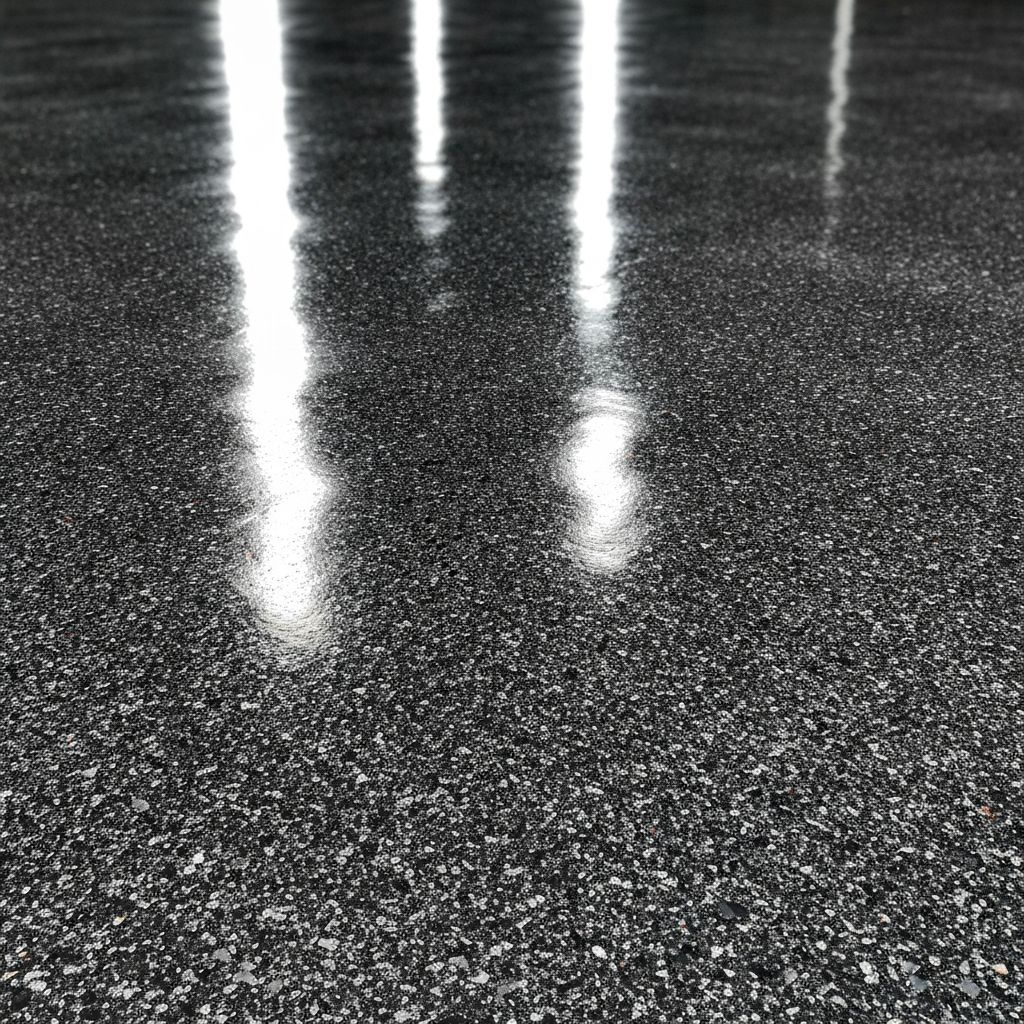
High-gloss epoxy garage floor with metallic flake finish
Garage March 2026 9 min read

Epoxy Garage Floors in Northern Colorado: The Complete Guide

Polyurea vs. epoxy. Why 80% of DIY coatings fail within two years. What proper prep actually looks like. And the real cost of getting it done right in Fort Collins, Loveland, and Greeley.

Keep Hammering Team

15+ Years of Experience

Cost by Coating System

Standard Epoxy$3–$5 / sq ft
100% Solids Epoxy$5–$8 / sq ft
Polyurea / Polyaspartic$8–$12 / sq ft
2-car garage (~500 sq ft)$1,500 – $6,000

A good garage floor coating transforms the most neglected room in the house into something you're actually proud of. It's also one of the highest-ROI upgrades a homeowner can make — durable, easy to clean, and it makes everything stored in the garage look better by association.

But garage floor coatings are also one of the most frequently botched DIY projects we see. The reasons are almost always the same: wrong product for the climate, inadequate surface prep, or moisture vapor not identified before application. This guide covers everything you need to know to make a smart decision.

Coating Systems: What's Actually Different

Not all "epoxy" is the same. Here's an honest comparison of the three systems we install.

Standard Epoxy

Interior spaces with minimal UV exposure, budget-conscious projects

$3 – $5 / sq ft
installed
5–10 years
lifespan

Advantages

  • Affordable entry point
  • Wide color selection
  • Good chemical resistance

Limitations

  • UV yellows over time
  • Slower cure (72+ hrs)
  • Temp-sensitive installation
  • Can peel if moisture present

100% Solids Epoxy

High-traffic garages, workshops, areas with heavy equipment

$5 – $8 / sq ft
installed
10–15 years
lifespan

Advantages

  • Much thicker than water-based
  • Excellent durability
  • Strong bond
  • Better chemical resistance

Limitations

  • Still UV-sensitive (yellows)
  • Slower cure
  • Requires perfect surface prep

Polyurea / Polyaspartic

Recommended

Colorado climate — the gold standard for garages here. What we recommend for almost every project.

$8 – $12 / sq ft
installed
15–25+ years
lifespan

Advantages

  • UV stable (won't yellow)
  • Full cure in 24 hrs
  • Works in extreme temps (-30°F to 140°F)
  • Flexible — resists cracking
  • Best long-term value

Limitations

  • Higher upfront cost
  • Less DIY-friendly
  • Requires professional application

Why Colorado's Climate Makes Polyurea the Right Choice

Standard epoxy is a reasonable product in a climate-controlled environment. Northern Colorado is not that. We swing from -20°F winter nights to 100°F summer days, and our concrete slabs expand and contract dramatically with those swings. Rigid epoxy cracks and delaminates under those conditions — typically within 3–5 years.

Polyurea and polyaspartic coatings are inherently flexible. They move with the slab rather than fighting it. They're also UV-stable, which matters in Colorado where we get 300+ days of sunshine per year — epoxy turns amber-yellow within 12–18 months in direct sunlight. Polyurea maintains its color indefinitely.

The other Colorado-specific factor is deicing salt. If you've had vehicles in your garage over a Colorado winter, your concrete has absorbed road salt. Salt creates chloride contamination that actively destroys coating adhesion. Our prep process — diamond grinding to a fresh surface — removes the contaminated layer that causes failures.

Our Installation Process

Surface prep is 80% of the job. Here's exactly what goes into a proper installation.

01

Moisture Test

We tape plastic sheeting to the slab for 24 hours. Any condensation means moisture vapor transmission — a coating will delaminate without addressing this first. Many garages in Northern Colorado have this issue due to soil conditions.

02

Diamond Grinding

We grind the entire slab surface with industrial diamond grinders to create a concrete surface profile (CSP) of 2–4. This is the single most important step. Acid etching — what DIY kits instruct — creates CSP 1 at best and fails on sealed or contaminated concrete.

03

Crack and Spall Repair

All cracks are routed out and filled with epoxy mortar or polyurea crack filler. Spalled areas (common in Colorado garages due to deicing salt damage) are built back up.

04

Base Coat Application

The base coat is broadcast into wet and rolled at the proper mil thickness. Temperature and humidity are monitored throughout — Colorado's low humidity actually helps coating adhesion.

05

Decorative Broadcast

Color flake or metallic pigment is broadcast into the wet base coat. Flake density can be adjusted from light (10%) to full broadcast (100%) for a terrazzo-like look.

06

Top Coat

A UV-stable polyurethane or polyaspartic top coat seals everything and provides the gloss level and chemical resistance. This is what you actually walk on.

Why DIY Epoxy Kits Fail

Big-box store epoxy kits fail at an extremely high rate — industry estimates put it around 80% within two years. The reasons are predictable:

  • Wrong surface prep method. Kit instructions call for acid etching, which creates a surface profile insufficient for coating adhesion. Diamond grinding is required.
  • Moisture not tested. Concrete slabs in Northern Colorado frequently have moisture vapor transmission issues. Coatings applied over wet concrete will peel.
  • Wrong product for Colorado conditions. Water-based epoxy from a kit is typically 40–50% solids. After solvent evaporation, you have 3–5 mils of actual coating — not enough for durability.
  • Temperature and humidity ignored. Epoxy has tight application windows. Most kits don't specify these requirements clearly, and garage environments vary wildly.

A professional installation costs more upfront but lasts 3–5x longer than a kit application. On a 500 sq ft garage, you're talking about the difference between $200 and lasting 2 years vs. $2,000–$4,000 and lasting 15+ years.

Decorative Options

The most popular look we install is a full-broadcast vinyl color flake floor — flakes broadcast at 100% coverage create a terrazzo-like appearance that hides tire marks, oil drips, and concrete imperfections extremely well. Colors range from neutral grays and tans to bold blues, reds, and custom blends.

Metallic epoxy floors — with swirling pigment effects — are increasingly popular for showroom-style garages. These are more technique-sensitive and sit at the higher end of the cost range, but the results are stunning.

Solid colors remain an option for those wanting a clean, minimal look. Charcoal, battleship gray, and slate are perennial favorites in Northern Colorado.

Ready for a Floor You'll Actually Be Proud Of?

We install polyurea and polyaspartic floor coatings throughout Fort Collins, Loveland, Greeley, Windsor, and Severance. Free on-site estimates include a moisture test and surface assessment.

High-gloss polyurea garage floor